The Visual Language of Modern Elegance: Understanding Beam Visionary
In the crowded landscape of digital and print media, typography often does the heavy lifting before a single word is read. It sets the tone, establishes authority, and signals to the audience whether they are looking at a cutting-edge tech startup or a heritage luxury brand. For designers, business owners, and content creators, the choice of typeface is a strategic decision that impacts brand perception. Enter Beam Visionary, a font family that bridges the gap between the functional clarity of sans serif and the personalized touch of a signature script. It is a typeface designed not just to be read, but to be experienced.
Defining the Aesthetic: What is Beam Visionary?
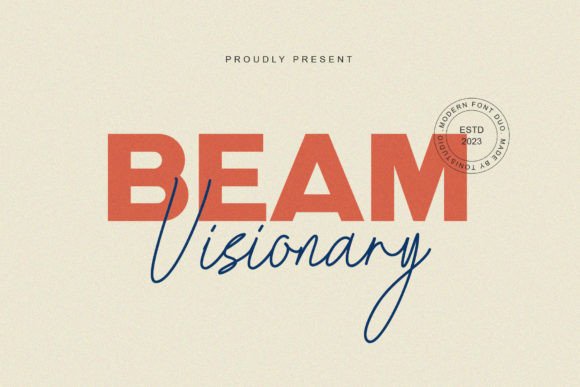
At its core, Beam Visionary is a study in contrasts and harmonies. It is classified as a high-contrast sans serif, meaning that the variation between the thickest and thinnest strokes of the letters is significant. This characteristic immediately elevates the font from a utilitarian text tool to a display typeface. It possesses a "classy" and "modern" vibe that feels at home in high culture, yet it retains the geometric simplicity required for digital legibility.
However, the defining feature of this collection is its dual nature. Alongside the structured sans serif sits a complementary signature font. This pairing allows users to inject a human, handwritten element into their layouts without sacrificing the professionalism of the primary text. Whether used for a fashion editorial, a high-end product label, or a personal portfolio, Beam Visionary offers a visual language that speaks of sophistication and intent.
The Anatomy of Elegance: Key Features and Characteristics
When evaluating a font for professional use, it is essential to look beyond the surface aesthetic and understand its technical construction. Beam Visionary is built with specific design principles that make it stand out in the sans serif category.
- High-Contrast Strokes: Unlike low-contrast sans serifs (like Helvetica or Arial) where line thickness is uniform, Beam Visionary mimics the stress found in serif typefaces. This gives it a more editorial and artistic feel, making it perfect for headers that need to command attention.
- Signature Integration: The inclusion of a signature font is a significant value add. It allows for a seamless workflow where a user can type out a formal name in the sans serif and append a flourish or a personal tagline in the script, creating a cohesive visual identity instantly.
- Optical Clarity: Despite its stylistic flair, the font maintains optical balance. The letter spacing (kerning) is calibrated to ensure that even at large display sizes, the letters breathe well, preventing the text from looking cramped or overly busy.
- Modern Geometry: The underlying structure of the characters relies on clean, modern geometry. There is no unnecessary ornamentation; the elegance comes from the precision of the curves and the sharpness of the terminals.
Strategic Application: Where and How to Use Beam Visionary
Understanding the strengths of Beam Visionary helps in deploying it effectively. Because it is a display font, it is not intended for long blocks of body copy (like this article). Instead, its power lies in high-impact moments.
Fashion and Luxury Branding
The fashion industry thrives on visual allure. Beam Visionary is naturally comfortable in this space. Its high-contrast nature mimics the strokes of calligraphy often seen on perfume bottles or haute couture packaging. A clothing brand looking to update its logo or create a lookbook would find that this font conveys exclusivity and trend-awareness. It suggests that the brand pays attention to the finer details.
Editorial Design and Magazine Layouts
In editorial design, the hierarchy of information is king. Designers can use the sans serif version of Beam Visionary for bold, impactful headlines that draw the reader's eye into the article. The signature variant can then be used for pull quotes, author bylines, or section dividers, adding a layer of personality and breaking the visual monotony of standard text.
Wedding Stationery and Event Invitations
For creators in the stationery business, font pairing is often the most time-consuming part of the design process. Beam Visionary solves this problem by offering a built-in companion. The combination of the clean sans serif for the "Details" section and the flowing signature for the couple's names creates an invitation that feels both modern and deeply personal.
Web Headers and Hero Sections
On the web, the "hero" section (the top part of a landing page) determines whether a visitor stays or bounces. Using Beam Visionary for the main h1 tag can immediately establish a site's credibility. It works exceptionally well for lifestyle blogs, interior design portfolios, and boutique agencies where the visual presentation is part of the service being sold.
Real-World Scenarios: Practical Examples
To visualize the utility of Beam Visionary, consider these practical scenarios:
- The Personal Brand: A life coach or consultant wants to create a brand identity that feels authoritative yet approachable. They could use the sans serif for their website navigation and headers to show structure, while using the signature font for their email sign-off graphics and social media quotes to show personality.
- The Tech Startup: A new app focusing on creative collaboration needs a logo that stands out. The geometric precision of Beam Visionary signals modernity and tech-savviness, while the high contrast adds a touch of premium quality, distinguishing it from generic, flat-design competitors.
- The Real Estate Flyer: Luxury real estate requires marketing materials that reflect the property's value. Using Beam Visionary for the property address and price creates a visual hierarchy that screams "premium listing." It avoids the cheap look of standard system fonts while remaining highly readable.
Evaluating Suitability: Strengths and Considerations
While Beam Visionary is a powerful tool, it is important to understand its limitations to use it successfully. Every typeface has a personality, and it must match the voice of the project.
The Strengths
The primary strength is versatility within the display category. You are essentially getting two distinct but related styles in one package. It saves time and ensures visual consistency. Furthermore, its "high culture" association makes it an excellent shortcut for brands trying to establish premium positioning. It does a lot of the heavy lifting in terms of aesthetic signaling.
Considerations and Limitations
The main limitation is its unsuitability for body text. High-contrast sans serifs can cause eye strain when read in long paragraphs at small sizes. If you are writing a blog post or a technical manual, you should pair Beam Visionary with a standard, low-contrast sans serif (like Roboto or Open Sans) for the body copy.
Additionally, because it has a strong personality, it may clash with other decorative fonts. It is best to let Beam Visionary be the star of the show. If you use it for your headers, choose a very neutral, quiet font for your secondary text to avoid visual chaos.
Tips for Implementation
For those ready to integrate this typeface into their workflow, here are a few guidelines to ensure the best results:
- Size Matters: Use it big. Beam Visionary shines at larger point sizes where the high-contrast details can be appreciated. Do not shrink it below 14pt if possible.
- Color and Contrast: Because the strokes vary in weight, ensure your background color provides enough contrast. Thin strokes can disappear on low-contrast backgrounds (e.g., light grey text on a white background).
- Kerning Check: While the font comes with standard kerning, always double-check the spacing between specific letter pairs (like 'A' and 'V' or 'T' and 'o') when setting large headlines, as optical illusions can make these look uneven.
- Signature Usage: Use the signature font sparingly. If you use it for a headline, do not use it for a sub-headline. Reserve it for specific accents like a logo tagline or a special callout to maintain its impact.
Conclusion: A Vision for Your Design
In a world where attention is the scarcest resource, the tools we use to capture it matter. Beam Visionary is more than just a collection of letters; it is a design asset that brings a specific energy to projects. It offers the clarity required for modern digital interfaces and the elegance demanded by high-end print media. By understanding its features—its high contrast, its dual nature, and its display focus—creators and business owners can leverage Beam Visionary to craft experiences that are not only visually stunning but also strategically effective. Whether you are refreshing a brand identity or designing a one-off invitation, this font provides a reliable path to achieving a look of modern sophistication.