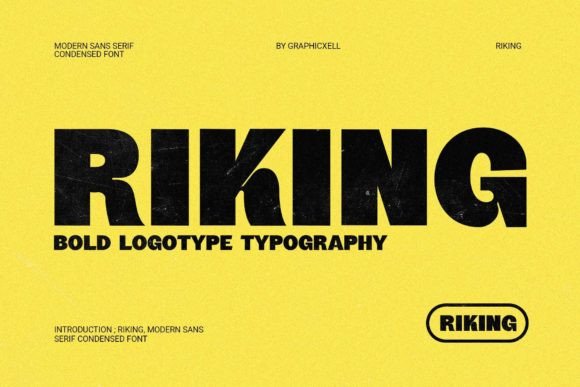
Riking Font: The Modern Condensed Sans-Serif for Bold, Clean Design
What Exactly is the Riking Font?
You know the feeling when you're scrolling through a website or looking at a poster, and the text just feels... right? It's clean, it's sharp, and it doesn't get in the way of the message. That's the kind of experience the Riking font is built to create. At its core, Riking is a condensed sans-serif typeface. Let's break that down. "Sans-serif" means it doesn't have those little decorative feet or strokes at the ends of letters, which gives it a modern, streamlined look. "Condensed" means the letters are narrower and sit closer together than in a standard font. This combination is powerful. It allows you to fit more text into a smaller space without sacrificing readability, and it gives your design an inherent sense of efficiency and contemporary style.
Think of Riking as the tailored suit of the font world. It's not fussy or ornate, but its precise cut and fit make a strong impression. The clean lines and compact design are its defining features. This isn't a font that tries to be everything to everyone; it excels in situations where you need a minimalist and sophisticated aesthetic. It's the typographic equivalent of a well-organized workspace—everything has its place, and the result is clarity and focus.
Where Does Riking Font Truly Shine?
The real value of a font like Riking isn't in its technical specs, but in how it solves real problems for real people. Let's move beyond the "what" and into the "where" and "why." Its condensed nature makes it a secret weapon for space-limited projects. Imagine you're a freelance designer creating a logo for a client with a long business name. A standard-width font might force you to shrink the text to an unreadable size or awkwardly wrap it. Riking lets you keep the name on one line, legible and professional. For marketers designing social media graphics, where every pixel counts, Riking allows for impactful headlines that don't overwhelm the visual. It's also a favorite for digital interfaces—think app menus, website navigation bars, or data tables in a dashboard. Its narrow footprint means more information can be displayed cleanly, improving the user experience without clutter.
But its use cases extend far beyond the screen. Entrepreneurs and small business owners often need to create a cohesive brand identity on a budget. Riking provides a sharp and professional look across multiple touchpoints: business cards, letterheads, email signatures, and packaging. Because it's so versatile, you can use it for both headlines and shorter blocks of body text (though for long-form reading, you'd pair it with a more traditional serif or sans-serif). Educators and publishers might use it for presentation slides, report covers, or chapter headings in a document to create a modern, authoritative feel. Even for personal projects, like creating a sleek resume or a stylish wedding invitation, Riking brings a level of contemporary sophistication that feels intentional and polished.
Matching Riking to Your Project's Needs
Choosing any design element, including a font, is about context. Riking isn't a universal solution, but it's an exceptionally good one for specific goals. Before you download or purchase it, ask yourself a few practical questions. What is the primary medium? If your project is primarily for print—like a magazine layout or a poster—Riking's condensed form can create dynamic, eye-catching layouts. For digital use, its clarity at small sizes on screens is a major plus. Who is your audience? Riking's modern aesthetic resonates strongly with younger, tech-savvy demographics and in industries like tech, fashion, and creative services. If your audience expects a more traditional or formal tone (like in legal documents or classic literature), it might feel out of place.
Consider the hierarchy of your design. Riking is a star player for headlines, logos, and call-to-action buttons. Its bold weight (if available) makes a statement. However, using it for a 500-word blog post body would likely cause reader fatigue due to its condensed nature. The key is to use it strategically. A blogger might use Riking for their site's main title and post headlines, then switch to a more readable font for the article text. This creates a strong visual identity while maintaining comfort. Content creators on platforms like YouTube or Instagram can use it for video thumbnails and text overlays where instant readability and impact are crucial.
Practical Considerations Before You Commit
So, you're convinced Riking could be the right fit. Here’s what to think about next. First, check the font family. Does it come with multiple weights (like Light, Regular, Bold, Black) and styles (like Italic)? A good family gives you more flexibility to create visual contrast and hierarchy within your designs. Second, verify the license. Is it free for personal use, but requires a purchase for commercial projects? Understanding the licensing terms is non-negotiable to avoid legal issues down the line, especially if you're a business or freelancer.
Third, test it in context. Don't just look at the font specimen sheet. Mock it up in your actual project. How does it look with your chosen color palette? Does it pair well with other fonts you plan to use? A common and effective pairing is to use Riking for headlines and a more neutral, slightly wider sans-serif (like Open Sans or Lato) for body text. Finally, consider accessibility. While Riking is clean, its condensed form can be challenging for users with dyslexia or visual impairments. Ensure there is sufficient contrast and size, and always prioritize readability for your entire audience.
Bringing It All Together
In the end, the Riking font is more than just a set of letters; it's a design tool that communicates efficiency, modernity, and confidence. It solves the practical problem of space without sacrificing style. For the entrepreneur building a brand, the designer crafting an interface, or the marketer grabbing attention, it offers a reliable path to a professional and bold statement. Its strength lies in its focused simplicity. By understanding its condensed nature and applying it to the right contexts—where impact, clarity, and a contemporary edge are needed—you can leverage Riking to elevate your projects from ordinary to outstanding. It’s not about using a trendy font; it’s about choosing a precise tool for a specific, effective outcome.