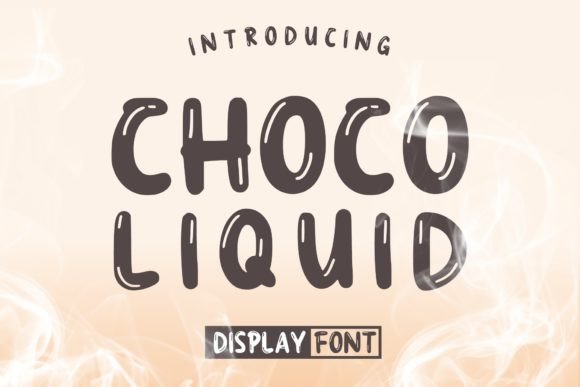
Evaluating Choco Liquid: A Practical Guide to a Bold Display Typeface
In the vast world of digital typography, selecting the right font is a critical decision that balances aesthetic appeal with functional clarity. For designers and creators seeking a typeface that commands attention and conveys a specific mood, display fonts offer a powerful solution. Among these, Choco Liquid presents itself as a distinct option. This article provides a balanced evaluation to help you determine if its characteristics align with your project's goals.
Understanding the Core Characteristics of Choco Liquid
Choco Liquid is categorized as a display font, which means its primary design purpose is for use in headlines, titles, and other prominent textual elements rather than for body copy. Its defining visual trait is a liquid, flowing aesthetic. The letterforms appear as if crafted from a viscous substance, featuring smooth curves, varied stroke widths, and a sense of dynamic movement. This design creates an immediate impression of energy and playfulness. The font is designed to be "brave and fun," suggesting it does not shy away from making a strong stylistic statement.
Key Considerations for Your Project
When evaluating any display font, it's essential to move beyond initial attraction and consider practical application. For Choco Liquid, several factors warrant careful thought.
Visual Impact vs. Readability
The very features that give Choco Liquid its character—its fluid forms and decorative style—inherently prioritize impact over legibility at small sizes or in dense text blocks. It is engineered to be seen and felt quickly, not to be read paragraph by paragraph. Therefore, a primary consideration is the context of use. Will the text be viewed at a glance, or does it require sustained reading? For short, impactful words or phrases, its design can be highly effective. For longer sentences or smaller point sizes, the intricate details may become cluttered and reduce comprehension.
Context and Audience Alignment
The "brave and fun" descriptor points directly to its ideal audience and setting. Projects targeting children, celebrating informal events, or promoting products with a youthful, energetic brand identity are natural fits. Conversely, for corporate communications, legal documents, or contexts demanding neutrality and authority, Choco Liquid would likely be incongruous. Understanding your audience's expectations is crucial; a playful font can enhance engagement in the right setting but undermine credibility in the wrong one.
Scenarios Where Choco Liquid Shines
Based on its design philosophy, Choco Liquid tends to perform exceptionally well in specific creative scenarios. It is often a strong candidate for:
- Merchandise and Apparel: The bold, graphic nature of the font translates well to printed t-shirts, hoodies, and hats where a single phrase or logo needs to stand out.
- Packaging and Labels: For products aimed at a younger demographic or those in the food, candy, or novelty sectors, its liquid aesthetic can reinforce the product's theme.
- Event Materials: Birthday party invitations, festival posters, or social media graphics for celebrations can benefit from its energetic and informal vibe.
- Creative Titles: Book covers (particularly for children's books or fun, light-hearted genres), album art, and video thumbnails can use Choco Liquid to establish a clear and engaging tone immediately.
- Social Media Content: In a fast-scrolling environment, its distinctive shape can help a post or story stop a viewer's thumb, making it useful for calls-to-action or key headlines in digital campaigns.
When to Consider Alternatives
No single font is universal. There are clear situations where other typefaces would serve your project more effectively than Choco Liquid.
- Body Text and Long-Form Content: For the main text of a website, blog post, or printed article, a highly legible sans-serif or serif font is essential. Choco Liquid would cause significant reader fatigue in this role.
- Professional and Corporate Branding: If your project requires an image of stability, trust, and sophistication—common in finance, law, or B2B services—a cleaner, more neutral display or sans-serif font is a safer choice.
- Interface Design: For user interface elements like buttons, menus, and labels where clarity and quick recognition are paramount, the decorative nature of Choco Liquid could hinder usability.
- High-Density Informational Graphics: In infographics, data charts, or technical manuals where text accompanies complex information, simplicity and clarity should take precedence over stylistic flair.
Making a Practical Decision
To determine if Choco Liquid aligns with your goals, follow a practical evaluation process.
- Define Your Project's Primary Goal: Is it to attract attention, convey a specific mood, or deliver information clearly? Choco Liquid excels at the first two.
- Analyze Your Audience: Create a profile of your typical viewer or reader. Would they respond positively to a playful, bold typeface, or would they expect a more formal tone?
- Test in Context: Never choose a font based on a specimen sheet alone. Mock up your actual design—be it a t-shirt graphic, a social media post, or a book cover—using Choco Liquid. Evaluate it at the intended size and in the intended color palette. Does it maintain its appeal and clarity?
- Consider Licensing and Versatility: Ensure the font's license permits your intended use (e.g., commercial print, digital products). Also, check if it includes necessary characters, weights, or language support for your project.
Ultimately, Choco Liquid is a specialized tool in a designer's kit. Its value lies not in being a universal solution, but in its ability to inject a specific, high-energy personality into a project. By carefully weighing its strengths in visual impact against its limitations in readability and formality, you can make an informed choice. If your project calls for a typeface that is unapologetically bold, fun, and designed to be remembered, then exploring Choco Liquid further could be a worthwhile step in your creative process.