Drip Style: A Practical Guide to Integrating This Original Handwritten Font
In the toolkit of any designer, marketer, or content creator, the selection of a typeface is a foundational decision that influences the entire project. While many fonts serve general purposes, specific projects demand a unique character and personality. This is where specialized assets like Drip Style come into focus. As an original, handwritten font, it offers a distinct aesthetic that can solve specific creative challenges. Understanding its technical features, practical applications, and integration points is key to using it effectively within a professional workflow.
Understanding the Asset: What is Drip Style?
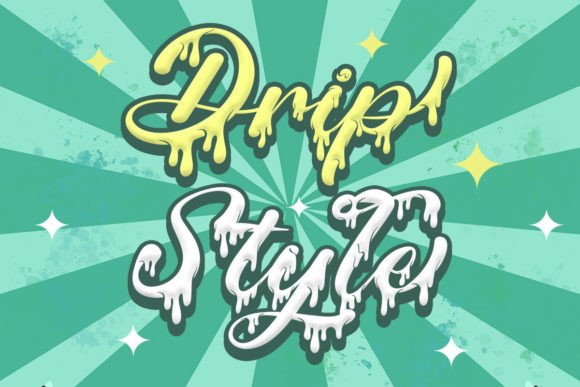
Drip Style is a custom-designed, handwritten font characterized by its fluid, "dripping" letterforms. It is not a generic script but an original creation intended to evoke a specific mood: one of indulgence, fun, and creativity. Its visual personality makes it a strategic choice rather than a default one. The font is designed to be PUA coded (Private Use Areas), a technical detail with significant practical implications. This means every glyph, swash, and alternate character is accessible through a standard character map, ensuring seamless use across various software platforms without requiring advanced design applications or OpenType feature support.
This accessibility is a critical point in the planning and execution phase of a project. A designer does not need to worry about software compatibility issues when incorporating Drip Style into a workflow involving multiple team members or different design tools. The font functions reliably, allowing the creative process to focus on application and impact rather than technical troubleshooting.
Strategic Application: Where Drip Style Fits in the Creative Process
Integrating a specialized font like Drip Style is most effective when it aligns with a project's core objective. Its use case is not universal; it is a targeted solution for designs that aim to entice, excite, or communicate a sense of handmade quality. Considering its application early in the brainstorming or planning stage helps set the right creative direction.
Pre-Project and Conceptual Planning
During the initial brief or mood board phase, identifying the need for a font with a whimsical, indulgent character can guide the entire aesthetic. If a project for a local bakery, a children's party service, or a confectionery brand is being conceptualized, Drip Style becomes a prime candidate. Specifying it at this stage ensures that all subsequent design elements—color palettes, imagery, and layout—are composed to complement its unique form, leading to a more cohesive final product.
Execution and Asset Integration
Where Drip Style truly proves its value is during the hands-on design phase. Its primary strength lies in creating immediate visual appeal for specific contexts:
- Food and Beverage Marketing: It is exceptionally suited for cake menus, candy store posters, ice cream shop signage, and bakery branding. The dripping effect subconsciously suggests sweetness, richness, and a product that is worth indulging in.
- Event and Party Collateral: For invitations, banners, and social media graphics for birthdays, baby showers, or festive celebrations, Drip Style injects a playful and personalized tone.
- Creative and Hobbyist Projects: Scrapbooking, custom apparel graphics, and DIY craft labels benefit from its handwritten, artisanal feel.
Its interaction with other design assets is crucial. Drip Style works best as a headline or accent font, paired with a clean, highly legible sans-serif for body text. This contrast ensures readability while allowing the decorative font to capture attention. In a workflow, this means the designer is typically using Drip Style for a logo, a hero banner title, or a featured product name, not for paragraphs of descriptive copy.
Practical Implementation and Workflow Integration
Smooth integration into a daily workflow requires understanding the practical steps of using the font. Since Drip Style is PUA coded, the process is straightforward.
- Installation and Activation: After purchase and download, the font files (often .OTF or .TTF) are installed on the operating system. This makes them available to any installed application, from Adobe Illustrator and Photoshop to Canva, Microsoft Word, and Procreate.
- Accessing Glyphs: In most design software, you can access the full set of alternate characters and swashes through the Glyphs panel (found under the Window menu in Adobe apps). For software without an advanced glyphs panel, the Character Map (Windows) or Font Book (Mac) can be used to copy and paste the specific swash or ligature needed. This step is vital for customizing the text and making the design unique.
- Application and Customization: Type out the desired text. Then, use the Glyphs panel to select individual letters and swap them for stylistic alternates. This allows you to add flourishes to the beginning or end of words, creating a truly bespoke look. Adjust kerning and leading as needed, though handwritten fonts often benefit from a slightly looser, more natural spacing.
Quality Control and Final Output
As with any design element, quality control is essential. Before finalizing a project, check the font's rendering across different formats. If the design is for print, ensure the color mode (CMYK) and resolution are correct. For digital use, test how the font appears on various screen sizes, especially if used on a website. While Drip Style is not intended for small body text, it should remain legible and impactful as a headline on both desktop and mobile views. Converting the text to outlines or curves in the final vector file (for logos) is a best practice to avoid font substitution issues for the end client.
Long-Term Use and Organizational Considerations
Adding a specialized font like Drip Style to your library is an investment in your creative versatility. For small business owners and freelancers, it becomes a reusable asset for recurring clients in the food, events, or lifestyle sectors. Organizing your font library with clear naming conventions (e.g., "Handwritten - Drip Style") helps in quickly locating the right tool for the job during future projects.
However, it is also important to recognize its limits. Using Drip Style in a corporate financial report or a legal document would be inappropriate and undermine credibility. Its power is in its specificity. By reserving it for projects where its playful, enticing character is an asset, you maintain the integrity of your professional work and ensure the font delivers maximum impact when used.
Ultimately, Drip Style is more than just a novelty font. It is a purpose-built design tool. When integrated thoughtfully into a workflow—from initial concept through to final execution—it provides a reliable way to inject personality, attract customer attention, and communicate a specific brand message with clarity and style. Its ease of use, thanks to PUA encoding, makes it a practical addition for any creator looking to expand their typographic toolkit with a unique and effective asset.