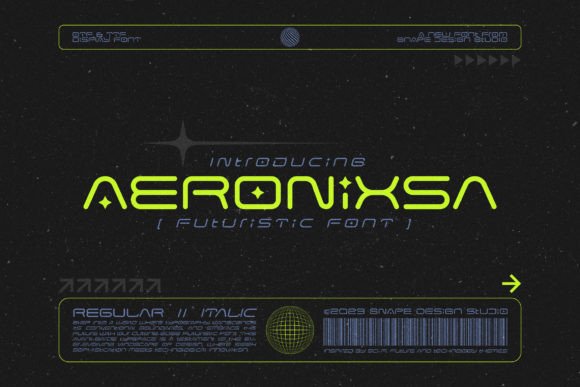
The Silent Architect of the Future: Why Typography Defines Our Digital World
In the vast ecosystem of digital design, we often fixate on the grand gestures—the sweeping hero images, the complex color theories, and the intricate user interfaces. Yet, there is a silent architect working tirelessly in the background, shaping how we feel, interpret, and connect with content. That architect is typography. It is not merely the vessel for words; it is the tone of voice, the personality, and the very texture of a visual experience. As we step further into an era dominated by digital interfaces, virtual reality, and artificial intelligence, the demand for typefaces that mirror this high-tech reality has never been higher. Enter Aeronixsa, a typeface collection that does not just participate in the future of design—it actively shapes it.
Deconstructing the DNA of Aeronixsa
When we look at traditional typography, we see history. We see serifs that recall the chiseling of stone and sans-serifs that echo the industrial revolution. But when we look at Aeronixsa, we see trajectory. This is a font collection born from the concept of "innovation meets aesthetics." It is a futuristic font family designed specifically for the visual language of tomorrow.
But what makes a font feel "futuristic"? It is rarely just about making letters look jagged or robotic. The genius of Aeronixsa lies in its ability to blend sleek, dynamic geometry with organic readability. The characters are visually striking, featuring sharp angles and fluid curves that suggest movement and speed. It captures the essence of aerodynamics in text form. Whether you are designing a user interface for a smart home device or creating the title card for a sci-fi indie film, Aeronixsa provides a visual shorthand for advanced technology and forward-thinking design.
The Intersection of Artistry and Engineering
Designers often face a dichotomy: choose a font that is beautiful, or choose a font that is functional. Highly stylized futuristic fonts often sacrifice legibility for the sake of looking cool. Conversely, standard utility fonts can lack the spark needed for creative branding. Aeronixsa resolves this conflict. It is engineered with precision, ensuring that every glyph maintains its structural integrity even at small sizes, yet it retains the artistic flair required to make a header pop off the page.
The collection is versatile. It acknowledges that "futuristic" is a broad term. For some, it means the neon-noir aesthetic of cyberpunk; for others, it means the clean, minimalist whitespace of Silicon Valley. Aeronixsa offers variations that cater to these different moods, allowing designers to toggle between aggressive, high-energy displays and more subdued, technical applications.
Practical Applications in Modern Workflows
Understanding the aesthetic value of a font is one thing; integrating it into a professional workflow is another. How does Aeronixsa fit into the daily grind of a graphic designer, a UI/UX specialist, or a branding strategist?
Tech Branding and Startups
The startup world is saturated. Thousands of new apps and tech companies launch every month, all vying for attention. To stand out, a brand needs to look established yet innovative. A generic sans-serif might make a tech company look safe, but it won't make them look groundbreaking. Using Aeronixsa in a logo or marketing collateral immediately signals to the viewer that this brand is about the next big thing. It suggests precision, speed, and modernity—qualities every tech startup wants to project.
Editorial and Publication Design
Magazine covers, blog headers, and article pull-quotes are excellent places to experiment with type. If you are writing an article about the future of space travel, AI ethics, or electric vehicles, the typography needs to support the narrative. Aeronixsa serves as a perfect bridge between the content and the reader, setting the mood before a single sentence is read. It turns a standard article into an immersive experience.
Environmental and Event Graphics
Think about concert posters for electronic music festivals or signage for a gaming convention. These environments are loud, fast, and sensory-heavy. The typography used in these spaces needs to be bold enough to be read from a distance and stylistically relevant to the atmosphere. The dynamic nature of Aeronixsa makes it an ideal candidate for large-scale print, where its geometric details can be fully appreciated.
Customization: The Key to Versatility
One of the most significant considerations when choosing a font family is adaptability. A font that is too rigid limits creative expression. Aeronixsa addresses this by offering user-friendly customization options. In the age of variable fonts and advanced OpenType features, designers expect control.
With Aeronixsa, you aren't just buying a static set of letters. You are acquiring a toolkit. Depending on the specific weights and styles included in the collection, designers can manipulate the type to fit very specific spaces. Need a condensed version for a mobile app sidebar? Or perhaps a wide, sprawling version for a website banner? The architecture of the Aeronixsa collection is built to accommodate these needs without losing the family resemblance that keeps a brand identity cohesive.
Addressing the "Readability vs. Style" Concern
A common hesitation when adopting a futuristic or display font is the fear of illegibility. We have all seen designs where the "Z" looks like a "2" or where the letters are so abstracted that they become abstract art rather than communication tools. This is a valid concern.
However, modern type design has evolved. Aeronixsa is a testament to this evolution. While it pushes boundaries, it respects the fundamental rules of letterforms. The spacing (kerning and tracking) is typically optimized for screen use, ensuring that even when the letters look aggressive, they don't crowd each other into an unreadable mess. It is designed to be "visually striking" without being "visually confusing." This balance is crucial for accessibility. A futuristic design is useless if the user cannot navigate the interface because the font is too abstract.
Integrating Aeronixsa into Your Design System
For those managing a design system—whether for a client or an in-house product—introducing a new font is a significant decision. It affects loading times, brand consistency, and developer handoff. Aeronixsa is crafted to be a highlight element within a system.
It pairs exceptionally well with neutral, highly readable body fonts. Imagine a website where the body copy is set in a clean, standard Inter or Roboto, but all the H1s, H2s, and interactive buttons are set in Aeronixsa. This hierarchy creates a rhythm. The user reads the content comfortably but is constantly reminded of the brand's futuristic edge through the headers and interactive elements. It creates a "tech-noir" or "high-tech" vibe that feels intentional and sophisticated.
The Psychological Impact of Futuristic Typography
Never underestimate the psychology of type. Serifs build trust and tradition. Handwritten scripts build intimacy. What do geometric, futuristic fonts like Aeronixsa build? They build anticipation.
When a user lands on a page utilizing Aeronixsa, their brain immediately categorizes the content as "advanced." It creates a sense of excitement and possibility. This is particularly effective for industries dealing with complex products. If you are selling blockchain software, VR headsets, or sustainable energy solutions, the visual language of the future helps demystify the product. It makes the complex feel accessible and cool. Aeronixsa acts as a visual seal of quality for modern innovation.
Choosing the Right Tools for the Job
Before investing in a premium font collection, designers should audit their needs. Are you working on a project that requires long-form reading? If so, Aeronixsa should be used sparingly, perhaps only for headings. Are you working on a branding project for a tech firm? Then Aeronixsa could be the cornerstone of the entire visual identity.
Consider the versatility of the license and the file formats. A collection like Aeronixsa usually comes with various formats suitable for web (WOFF2), desktop (OTF/TTF), and potentially mobile apps. Ensuring that the font covers the character sets you need (Latin, Cyrillic, etc.) is also a practical step.
Ultimately, typography is the voice of the visual world. As our world becomes increasingly digital, our visual voices need to evolve. We need typefaces that speak the language of code, circuits, and artificial intelligence. We need typefaces that are sleek, dynamic, and unafraid to stand out.
By embracing collections like Aeronixsa, designers are not just choosing a font; they are aligning themselves with a philosophy of progress. They are choosing to break away from the mundane and inject a sense of wonder and capability into their work. Whether it is a small icon on a smartwatch or a massive billboard in Times Square, the right typography transforms information into an experience. Aeronixsa is more than just a set of characters; it is a passport to the next generation of design. It empowers creativity, ensuring that whatever you build today, looks like it belongs in the world of tomorrow.