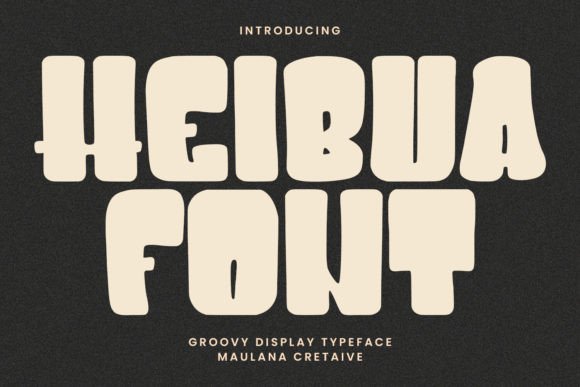
Heibua Groovy: A Typeface That Brings Creative Energy to Every Design
What Exactly Is Heibua Groovy?
Logo Design and Brand Identity
- Example: A children’s book publisher could use Heibua Groovy for their imprint logo, signaling imagination and joy, while using a classic serif for author names and descriptions.
- Practical Tip: Adjust letter spacing (tracking) slightly. A touch more space can enhance its retro feel and improve clarity at smaller sizes.
Social Media and Digital Content
Editorial and Print Projects
Pairing Heibua for Maximum Impact and Clarity
- With a Neutral Sans-Serif: This is the most versatile and effective pairing. Fonts like Open Sans, Lato, or Helvetica provide a clean, modern counterpoint. Use the sans-serif for all body text, subheadings, and supporting information. Heibua remains the star for the main headline or logo. This combination works for websites, presentations, and marketing materials where clarity is paramount.
- With a Classic Serif: For projects that require a touch more tradition or elegance, pair Heibua with a serif like Garamond, Times New Roman, or a slab serif like Rockwell. This duo can work beautifully for book covers, editorial layouts, or branding for a boutique that blends modern creativity with timeless quality. The serif adds a layer of sophistication, grounding the playful display font.
- With a Script Font (Use Sparingly): This is a more advanced pairing. A delicate script font can be used for very short accents—a signature, a "and," or a small decorative word—to add a handcrafted feel. However, this requires careful execution to avoid visual clutter. Limit this pairing to special projects like wedding invitations or high-end product packaging.
Adapting Heibua for Different Audiences and Goals
For a small business owner, Heibua can be the cornerstone of a brand refresh. It can make a local service feel more personal and a product feel more artisanal. Use it on business cards, website headers, and packaging to create a cohesive and memorable identity.
For educators and bloggers, it’s a tool to make information more engaging. A history blog could use Heibua for article titles about cultural movements, making the past feel vibrant. A science communicator could use it to title a video series, making complex topics feel more approachable.
For marketers and entrepreneurs, it’s about strategic differentiation. In a crowded market, a distinctive font can be a key part of your brand’s visual signature. Heibua can help a campaign feel less corporate and more human, fostering a stronger connection with the audience.
Tips for Working with a Display Typeface
- Limit Its Use: A display font is a spice, not the main ingredient. Use it for headlines, logos, and key call-outs. Overusing it dilutes its impact and can make text tiring to read.
- Ensure Readability: Always test your design at the intended size. While Heibua is legible, extremely small sizes or complex backgrounds can hinder reading. If it’s hard to read, it’s not working.
- Consider Color and Contrast: Heibua’s rounded forms look great with solid, bold colors. Ensure there is sufficient contrast between the text and its background for accessibility and visual pop.
- Stay Consistent: Once you establish a pairing and a set of rules for using Heibua in your project or brand, stick to them. Consistency builds recognition and professionalism.